Kuala Lumpur Cost of Living 2026: Rent, Food and Where to Stay
Kuala Lumpur is the most underrated long-stay city in Southeast Asia: fast internet, real public transport, four cuisines on one street, and rent that undercuts Bangkok. Here is how it actually works.

Admin
Author
✨ You might also like
Ultimate Travel Planner Bundle
Plan any trip in under an hour. Budget tracker, packing lists, itinerary builder, accommodation comparison sheet, and travel safety checklist.
Digital Nomad Starter Toolkit
Everything you need to launch your location-independent life: visa guides, income tracker, city databases, and a 90-day action plan.
🚉 The One With Working Trains
Kuala Lumpur gets skipped. People fly through the airport on the way to somewhere else and never come back, which is a mistake, because on the boring practical measures it beats almost everywhere in the region.
Internet runs 90+ Mbps. The LRT and MRT are genuinely good, which in Southeast Asia is close to a miracle. Rent undercuts Bangkok. Everyone speaks English. And the food is Malay, Chinese, Indian and Peranakan all at once, frequently on the same street.
The one rule everyone agrees on: do not drive. KL traffic is the thing the trains exist to save you from.
📍 Where To Base Yourself
- Bangsar — the one to pick if you are working. Walkable streets of cafes, restaurants and bars, relaxed rather than frantic, good coworking, on the LRT. This is the sensible default.
- Bukit Bintang — the middle of everything. Restaurants, bars, malls, and the food street. Brilliant for a short stay, a lot for a long one.
- KLCC — the Petronas Towers postcard. Glass towers, luxury hotels, upscale malls. Pay for the view or skip it.
- Mont Kiara — expat-heavy, quieter, further out, priced like Bangsar.
Bangsar for a month or more. Bukit Bintang for a week. That is most of the decision.
💸 Rent: The Numbers
| What | Monthly |
|---|---|
| Studio or 1-bed, city fringe | RM 1,500 to 2,000 |
| 1-bed, Mont Kiara or Bangsar | RM 1,800 to 3,500 |
| 1-bed, popular expat areas generally | RM 2,400 to 3,500+ |
| 1-bed, KLCC or Bukit Bintang | RM 2,500 to 4,500 |
| 2-bed, city average | about RM 3,700 (~$840) |
| 2-bed, typical range | RM 3,200 to 4,300 |
And what a whole life costs:
- Single person: RM 3,000 to 6,000 a month
- Couple: RM 5,000 to 9,000
- Family with international school: RM 10,000 to 25,000+
A commonly quoted all-in figure for a working single person is around $1,300 a month, which for a capital city with this infrastructure is the actual headline here.
🍢 Food: Jalan Alor, And Why It Is Different
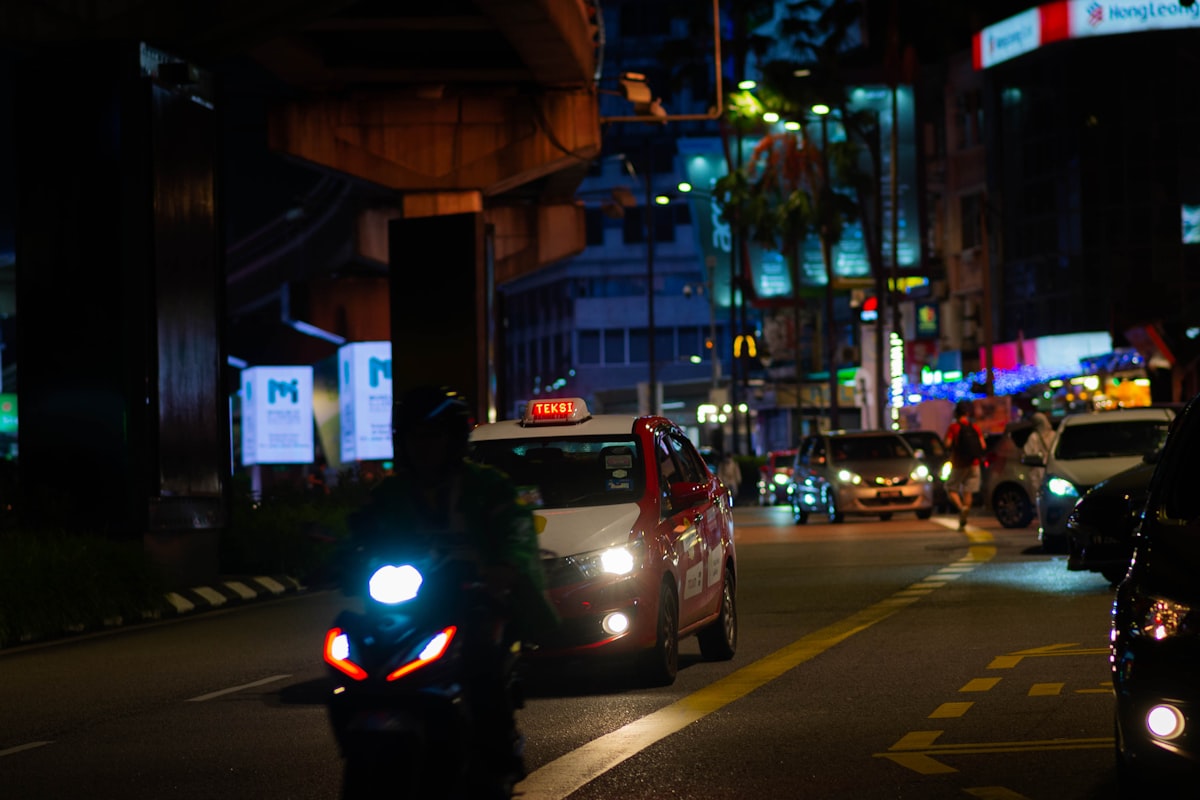
Jalan Alor is the one you have heard of and it earns it. Neon, woks, plastic stools, and an open-air strip that comes alive after sunset and runs until 6am.
What to expect on it: barbecue, seafood, satay, Peranakan dishes, and more variety than you can work through in a week.
One honest note: Jalan Alor is not the cheapest food in the city. Prices sit slightly above a proper hawker centre. You are paying a small premium for the density, the hours and the energy, and it is worth it, but do not confuse it with the cheapest plate in KL.
The wider point about eating here: Malaysia is the one country in the region where Malay, Chinese and Indian food are all local food. You are not choosing between cuisines, you are choosing between neighbours.
☕ Cafes And Working
Smaller specialty scene than Chiang Mai, but well established and less crowded.
- VCR — Bangsar. The one people name first.
- Feeka — Bukit Bintang. The central option.
With 90+ Mbps as a city baseline and good coworking in Bangsar, connectivity is genuinely not something you have to plan around here. That is rarer than it sounds.
🍸 Nightlife
Two areas, two moods.
- Changkat Bukit Bintang — the strip. British-style pubs and bars, back to back, busy and unsubtle. Walking distance from Jalan Alor, which is the obvious pairing: eat there, drink here.
- Bangsar — the local version. Draft beer, unwinding, a crowd that lives here rather than visits.
Malaysia is a Muslim-majority country and alcohol is taxed accordingly, so drinks cost noticeably more than in Thailand or Vietnam. Factor it in. The food is cheap, the beer is not.
🧭 Practical Notes
- Take the LRT and MRT everywhere. Traffic is the city's one genuinely bad feature.
- Plugs are Type G, the UK three-pin. Different from Thailand and Indonesia, so a Southeast Asia adapter may not cover it.
- It rains hard and briefly, usually late afternoon. Carry an umbrella and ignore the forecast.
- English is everywhere. Admin, leases and doctors are all straightforward, which is a bigger quality-of-life factor over months than people expect.
If you are comparing options, Malaysia also appears in best countries for digital nomads.
📋 Take The Checklist With You
Every area, price and step here as a printable one-page tick list: the Kuala Lumpur checklist. Free, no email.
✅ The Short Version
- Bangsar for a long stay, Bukit Bintang for a short one, KLCC only if you want the towers.
- 1-bed rent runs RM 1,500 to 2,000 on the fringe, RM 1,800 to 3,500 in Bangsar, RM 2,500 to 4,500 in KLCC.
- A working single person lands around RM 3,000 to 6,000 a month, roughly $1,300 all in.
- Jalan Alor runs to 6am and is worth it, but it is not the cheapest food in the city.
- Food is cheap, alcohol is not. That is the budget shape here.
- 90+ Mbps, real trains, English everywhere. Do not drive.
❓ Common Questions
Is Kuala Lumpur good for digital nomads?
Unusually so. City-wide internet around 90+ Mbps, a genuinely functional LRT and MRT network, widespread English, and rent below Bangkok. It is one of the most underrated long-stay cities in the region.
Where should I stay in Kuala Lumpur?
Bangsar for a month or more, for the walkable cafes and coworking. Bukit Bintang for a short stay, for being in the middle of everything. KLCC for the Petronas view if you want to pay for it. Mont Kiara if you want quiet and expat-heavy.
How much does it cost to live in Kuala Lumpur?
A single person needs roughly RM 3,000 to 6,000 a month, a couple RM 5,000 to 9,000. A commonly quoted all-in figure for a working single person is about $1,300 a month.
How much is rent in Kuala Lumpur?
Studios and one-bedrooms start around RM 1,500 to 2,000 on the city fringe, RM 1,800 to 3,500 in Bangsar or Mont Kiara, and RM 2,500 to 4,500 in KLCC or Bukit Bintang. A two-bedroom averages about RM 3,700.
Is Jalan Alor worth visiting?
Yes. It runs from sunset until about 6am with barbecue, seafood, satay and Peranakan food. Prices sit slightly above a standard hawker centre, so treat it as the best-value experience rather than the cheapest meal.
Do I need a car in Kuala Lumpur?
No, and you actively should not want one. The LRT and MRT cover the city well and traffic is the worst thing about KL.
🔗 Recommended Resources
UK-style Type G travel adapterAmazon
Malaysia uses UK three-pin, not Thai plugs
Malay phrasebookAmazon
English is common, Malay is appreciated
Compact travel umbrellaAmazon
Hard rain most late afternoons
Portable laptop standAmazon
For long Bangsar cafe sessions
As an Amazon Associate, demonteMAG earns from qualifying purchases. Affiliate links, we earn a small commission if you purchase, at no extra cost to you. Full disclosure.
Admin
Digital nomad, writer, and culture enthusiast. Based everywhere.