The Vinyl Revival Came for CDs Next
The vinyl revival stopped being about vinyl a while ago. CDs are returning, new players are being designed, and 4 inch records now exist. What people are actually buying is friction.
Admin
Author
✨ You might also like
Digital Detox: 30-Day Reset Program
A structured 30-day program to reclaim your attention, rebuild focus, and create a healthier relationship with technology.
Deep Work System: The Setup Guide
The complete productivity OS for creators and knowledge workers. Task management, project tracking, weekly reviews, and habit tracking in one place.
💿 The Vinyl Revival Has a Second Act
The vinyl revival stopped being a story about vinyl a while ago. It is now a story about physical media generally, and the clearest evidence is that the format everyone spent twenty years throwing away is quietly being picked back up.
CDs are returning. Not as nostalgia, and not at the scale of records, but with the same shape of demand: people buying a physical object for music they could stream for nothing, and paying for hardware to play it on.
The interesting question is not whether this is happening. It is why a generation that has never known scarcity of music keeps choosing the version that comes in a box.
📀 Are CDs Making a Comeback?
Yes, and the market signals are the same ones that preceded the vinyl revival by about a decade.
New CD players are being designed rather than merely manufactured, which is the real tell. Design attention follows demand. One of the more ambitious current examples is the SYITREN RM1, a deliberately styled portable player that went to crowdfunding with prices starting around $100. That is not a budget product competing on price. It is a lifestyle object competing on how it looks on a shelf.
The pattern rhymes exactly with turntables in the early 2010s: first the format survives on the secondhand market, then someone makes an attractive new machine, then the format is a hobby rather than a leftover.
CDs also carry an argument vinyl cannot make. The sound quality is genuinely, measurably high, the discs are cheap on the secondhand market, and they do not warp, scratch as easily, or require a careful setup to sound right.
🪩 The Format Nobody Expected: Tiny Vinyl
The stranger development is at the other end.
Tiny Vinyl are 4 inch records, smaller than a 7 inch single and roughly the size of a CD. They are a genuinely new physical format arriving in an era that was supposed to have finished with physical formats entirely. A dedicated player for them, The Tiny Vinyl Player, sells for around $50.
It is easy to be cynical about this. A 4 inch record holds very little music and objectively serves no practical purpose. But that is also true of every record, and it misreads what people are buying.
🎯 What People Are Actually Buying
Not sound quality. That is the polite explanation people give, and for most listeners on most equipment it is not the real one.
They are buying friction.
A streaming library is 100 million songs, instantly, in any order, forever. That is an extraordinary achievement and it has a specific side effect: nothing costs anything, so nothing is chosen. Albums become playlists become background. The catalogue is so large that it stops being a catalogue and becomes weather.
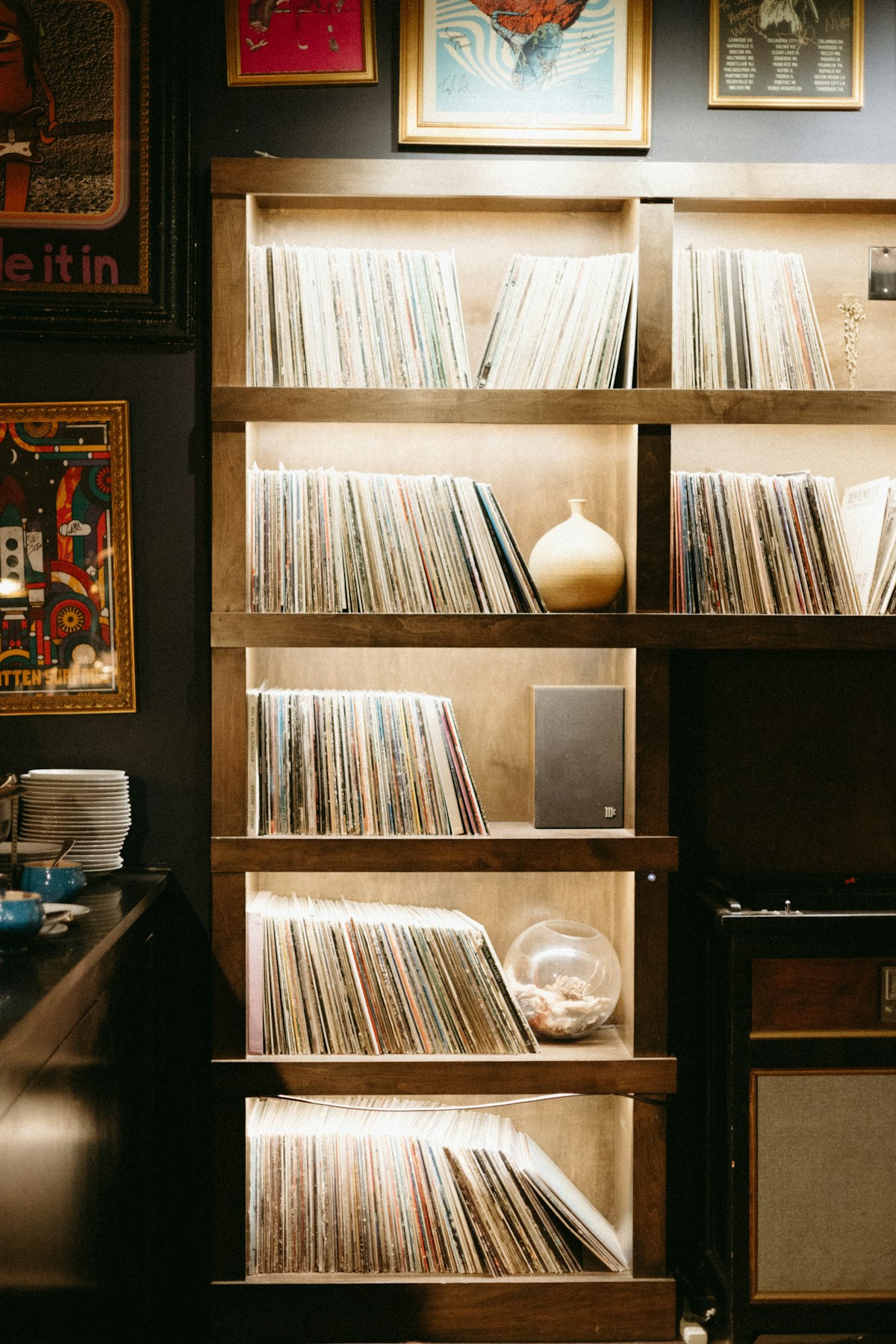
A record or a CD reverses every one of those properties. You own a small number of them. You picked each one deliberately. Playing one takes effort, and stopping it takes effort, so you tend to hear the whole thing in the order the artist chose. The limitation is the product.
This is the same instinct behind people paying $300 for a phone that deliberately does almost nothing. Constraint is being sold as a feature now, across categories, to people who can afford the unconstrained version and do not want it.
It is also a quiet argument against the thing we wrote about in how algorithms decide which albums count as the greatest of all time. A shelf is a canon you chose. A recommendation feed is a canon chosen for you.
🛒 If You Want to Start
A short, honest guide, because this is a hobby with an unusually high tax on enthusiasm.
Start with CDs, not vinyl. The discs are extremely cheap secondhand, the players are cheap, and there is no setup to get wrong. You will find out whether you actually enjoy owning music before spending real money.
Buy albums you already know you love. The point is deliberate listening, not building a collection that looks good. An expensive shelf of records you have not played is just furniture.
Do not chase audiophile gear at the start. The gap between a competent entry-level setup and an expensive one is far smaller than the gap between listening on purpose and listening while doing three other things.
Check the secondhand market first, always. Charity shops, used record stores and online marketplaces are full of CDs priced as though the format is dead, because until recently everyone assumed it was.
🏁 The Short Version
The vinyl revival was never really about analogue warmth, and the CD revival is making that obvious, because nobody claims CDs are warm. Both are about owning a finite number of things and choosing to spend time with them.
Streaming solved access completely and then discovered that access was not the only thing people wanted from music. What is coming back is not a format. It is the idea that a record could be an object you decided on, rather than a file that arrived.
🔗 Recommended Resources
Entry-level turntablesAmazon
Belt-drive with a built-in preamp, the least fiddly way in
Portable CD playersAmazon
The cheapest way to test whether you actually enjoy owning music
Record storage cratesAmazon
Stored upright, or they warp
As an Amazon Associate, demonteMAG earns from qualifying purchases. Affiliate links, we earn a small commission if you purchase, at no extra cost to you. Full disclosure.
Admin
Digital nomad, writer, and culture enthusiast. Based everywhere.