The Deliberately Boring Phone: Why People Are Paying $300 for Less
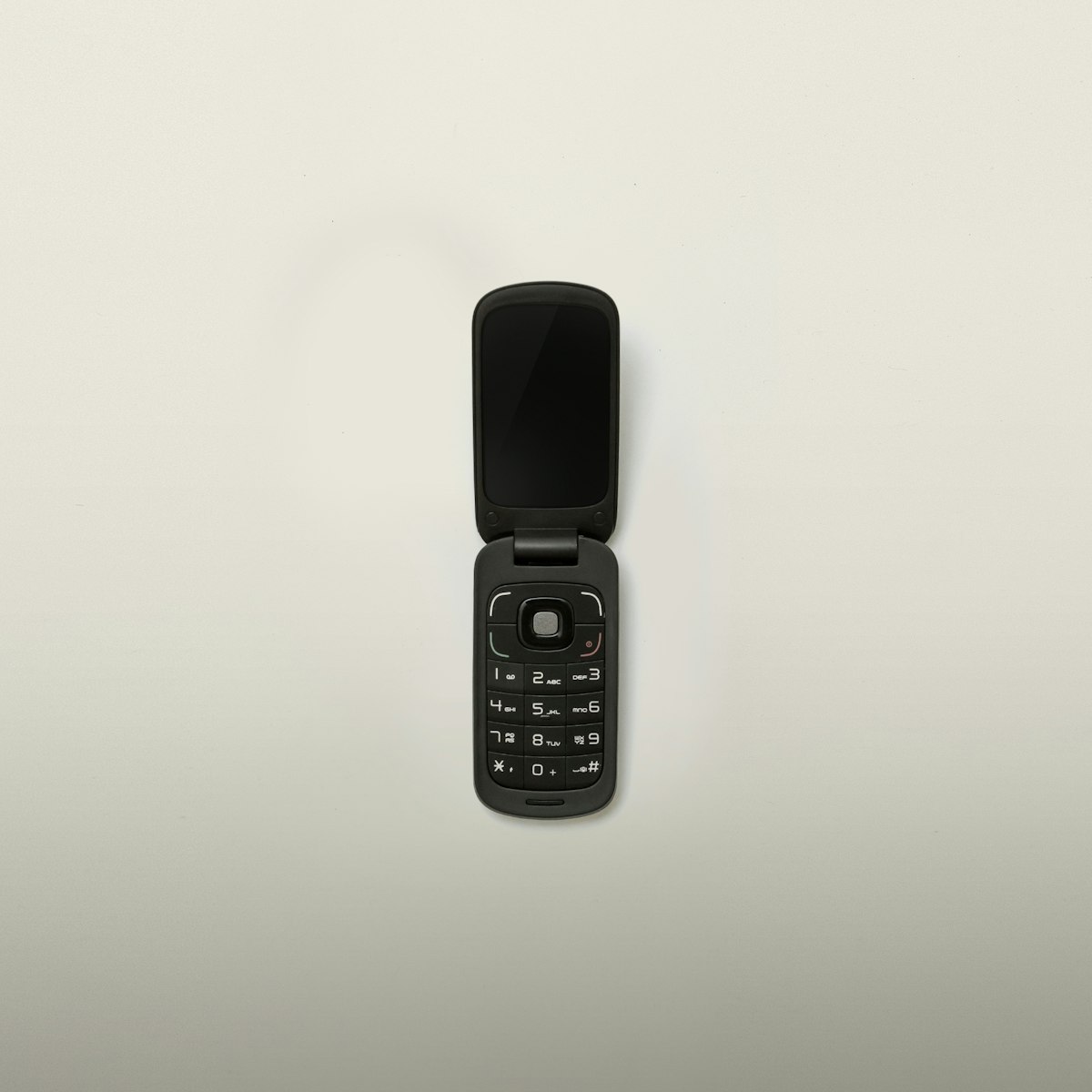
A new flip phone with a 2.8 inch black and white screen, nine physical buttons and almost no apps just launched at $300. Not a budget device. A premium one, priced for what it refuses to do. Here is why constraint is beating willpower, and how to get most of the benefit without buying anything.

Admin
Author
✨ You might also like
Digital Detox: 30-Day Reset Program
A structured 30-day program to reclaim your attention, rebuild focus, and create a healthier relationship with technology.
Deep Work System: The Setup Guide
The complete productivity OS for creators and knowledge workers. Task management, project tracking, weekly reviews, and habit tracking in one place.
📵 A $300 Phone That Does Almost Nothing
The Light Phone company has released a new model called the Light Flip. The specification reads like a list of omissions:
- A 2.8 inch black and white OLED screen
- No touchscreen
- Nine physical buttons
- A stripped-down operating system built on Android
- Around $300
There is no feed. No infinite scroll. No app store full of things engineered to keep you opening them.
The interesting part is the price. This is not a cheap phone for people who cannot afford a good one. It costs roughly what a mid-range smartphone costs, and it does a fraction as much. People are paying a premium for subtraction.
That is a genuinely new consumer behaviour, and it is worth understanding rather than mocking.
🏖️ The Observation That Explains the Market
Go to any beach this summer and watch what happens. Nearly everyone has brought a book. Nearly everyone opens it with real enthusiasm. And a few pages in, for one reason or another, the hand goes to the phone. The book goes down. An hour passes.
The honest reading of that scene is not that people have weak character, or that books are morally superior to screens. It is that competing with the screen is not a fair fight. These products are refined by enormous teams with enormous budgets and a very precise objective. Expecting raw willpower to beat that, several times an hour, every day, for years, is not a realistic plan.
Once you accept that framing, a $300 phone that cannot scroll stops looking eccentric and starts looking like a rational purchase.
You are not undisciplined. You are in an unfair fight, and you brought willpower to it.
🧱 Constraint Beats Willpower
There is a useful distinction here between two strategies people use to control their attention.
| Willpower strategies | Constraint strategies |
|---|---|
| Deciding to use it less | Deleting the app entirely |
| Screen time warnings | Phone charging in another room |
| Promising to stop at 11pm | A device that cannot do the thing |
| App timers you can extend | Greyscale, permanently |
The left column depends on your worst moment. Not your best intentions on a calm Sunday, but your tired, bored, slightly anxious 11pm self, who is precisely the person the product was designed for.
The right column removes the decision. It only has to be made once, while you are clear-headed, and it holds regardless of your state later.
This is why our 30 day social media experiment worked as an experiment, and also why a temporary detox rarely produces a permanent change. A detox tests what life is like without the thing. A constraint changes what is available by default. Only one of those survives a bad week.
🤨 The Honest Case Against
A dedicated dumb phone is not the obvious answer for most people, and it is worth being straight about why.
It is genuinely inconvenient. Maps, ride-hailing, banking apps, two-factor authentication, QR menus, boarding passes, event tickets. Modern life increasingly assumes a smartphone, and opting out means friction several times a week. For anyone travelling regularly, and this site has a lot of readers doing exactly that, some of these are not optional. See our first 90 days as a digital nomad guide for how much of that early logistics runs through a phone.
Two devices is often two problems. Plenty of people buy the minimal phone, keep the smartphone "just for maps", and end up carrying both. The smartphone quietly returns to its old role within a month.
It can be a purchase standing in for a decision. Buying a $300 object is a satisfying, concrete action that feels like solving the problem. Deleting four apps is free, less satisfying, and usually more effective.
It may treat the symptom. If you reach for the phone every evening because the evening is empty, a phone that cannot scroll gives you an empty evening and no phone. That may be exactly what you need, or it may send you looking for the nearest substitute.
🛠️ Get 80% of the Benefit for Free
Before spending anything, these do most of the work. They are ordered by leverage.
- Charge the phone outside the bedroom. The highest-return change available, and it costs nothing. Buy a cheap alarm clock and the last and first thirty minutes of your day change character completely.
- Delete the apps, keep the browser. Social platforms are deliberately worse in a mobile browser. No notifications, clumsier navigation, more friction. You keep access and lose the pull.
- Turn the screen greyscale. Colour is doing more work than people realise. In accessibility settings, most phones can do this permanently or on a schedule. A grey feed is a notably less interesting feed.
- Kill every notification that is not a human being. Not fewer. All of them. If it is not a person contacting you directly, it does not get to interrupt.
- Clear the home screen. Leave phone, messages, camera, maps. Everything else goes in a folder or gets found by search. Adding three seconds of friction removes a surprising number of unconscious opens.
- Try one deliberately boring hour daily. Same hour each day, phone in another room. Not a whole day, not a whole weekend. An hour, repeated, tells you more than a heroic weekend detox.
If you run all six for a month and still find yourself losing hours, that is real evidence that a hardware constraint might be worth $300. That is a much better basis for the purchase than a launch announcement.
🌱 What This Trend Actually Signals
The Light Flip is a small product and it will remain a niche one. But it is a visible marker of something broader: a growing number of people have concluded that their relationship with their phone is not going to be fixed by trying harder.
That is a meaningful shift. For fifteen years the framing was individual and moral. You should have more discipline. You should manage your screen time. Now people are starting to treat it as an environmental problem, and to change the environment instead of scolding themselves about it.
That instinct generalises far beyond phones. It is the same logic as not keeping biscuits in the house, or laying out running clothes the night before. Design the surroundings so the good option is the default, rather than relying on being an unusually determined person at exactly the moment you are least likely to be one.
You do not need a black and white flip phone to apply that. You just need to stop treating attention as a character test and start treating it as a design problem.
✅ The Short Version
- The Light Flip is a $300 phone with a small monochrome screen and physical buttons. People pay a premium for what it refuses to do.
- Willpower strategies depend on your worst moment. Constraint strategies only need one good decision.
- The honest downsides: real inconvenience, the two-device trap, and the risk of buying an object instead of making a decision.
- Phone out of the bedroom, apps deleted but browser kept, greyscale, and no non-human notifications get you most of the benefit for nothing.
- Run those for a month first. If you still lose hours, the hardware constraint is worth considering.
Product details and pricing were accurate as reported in July 2026.
🔗 Recommended Resources
Minimalist phones and modern flip phonesAmazon
The dumbphone shortlist
Digital alarm clock, so the phone leaves the bedroomAmazon
The first step everyone skips
E-reader with no browser to fall intoAmazon
Reading without the feed
As an Amazon Associate, demonteMAG earns from qualifying purchases. Affiliate links, we earn a small commission if you purchase, at no extra cost to you. Full disclosure.
Admin
Digital nomad, writer, and culture enthusiast. Based everywhere.